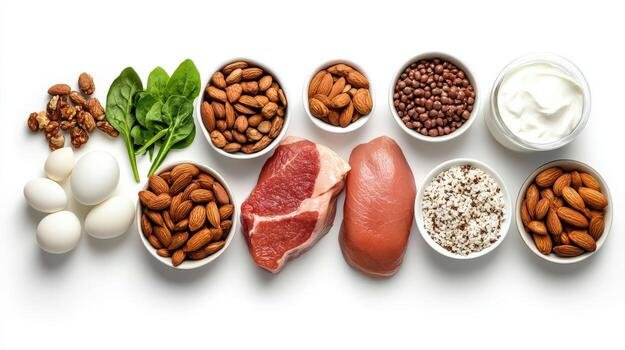
Protein is essential for muscle repair, energy, and overall health — but you don’t need a complicated diet to get enough of it. Here are 10 of the best protein sources, covering both animal and plant-based options, with a quick nutrition snapshot for each so you know exactly what you’re getting.
Nutrition values below are approximate, per 100g of the food as typically prepared (cooked/plain), and can vary slightly by brand or preparation method.
1. Eggs
Per 100g: 155 kcal · 13g protein · 11g fat · 1g carbs
Eggs are about as close to a perfect protein as food gets. They contain all nine essential amino acids along with choline, a nutrient many people don’t get enough of that supports brain and liver health. They’re also one of the cheapest proteins per gram, which makes them an easy habit to build rather than an expensive one. Try hard-boiling a batch at the start of the week so you always have a grab-and-go snack or salad topper ready. And don’t skip the yolk — most of the vitamins live there, not just in the white.
2. Chicken Breast
Per 100g: 165 kcal · 31g protein · 3.6g fat · 0g carbs
Few foods pack in as much Protein for as few calories as chicken breast. This is exactly why it’s a staple in nearly every muscle-building or weight-loss plan. It’s also a blank canvas. The same chicken can taste different depending on seasoning or marination, so it rarely gets boring. Cooking a few pounds at once and portioning it into containers makes weekday lunches effortless. Just avoid overcooking; a meat thermometer at 165°F keeps it juicy instead of dry.
3. Greek Yogurt
Per 100g: 59 kcal · 10g protein · 0.4g fat · 3.6g carbs
Greek yogurt gets its thick texture and protein boost from being strained of extra whey, which is also what gives it nearly double the protein of regular yogurt. It’s naturally rich in probiotics too, so it does double duty for digestion and muscle repair at the same time. Beyond breakfast bowls, it’s a great swap for mayonnaise or sour cream in dressings and dips if you’re looking to sneak in extra protein without changing the flavor much. Stick to the plain, unsweetened version when you can — the flavored cups often carry as much sugar as a dessert.
4. Salmon
Per 100g: 208 kcal · 20g protein · 13g fat · 0g carbs
Salmon stands out from most protein sources because it delivers omega-3 fatty acids alongside its protein, a combination that supports heart health, brain function, and recovery from exercise. It also cooks fast — a fillet takes well under 15 minutes in the oven or on a hot pan, which makes it realistic for a weeknight dinner even when you’re short on time. Wild-caught tends to have a slightly leaner, more pronounced flavor than farmed, but both are solid choices nutritionally. A simple squeeze of lemon and some herbs is really all it needs.
5. Lentils
Per 100g: 116 kcal · 9g protein · 0.4g fat · 20g carbs
Lentils are one of the few plant foods that deliver a meaningful amount of both protein and fiber in the same bite, which is why they leave you feeling full far longer than most side dishes. Unlike many dried beans, they don’t need to be soaked overnight — a simmer of 20 minutes or so is enough to make them tender and ready to eat. They’re also inexpensive, which makes them one of the most budget-friendly ways to stretch a protein source across an entire week of meals. Stir them into soups, curries, or grain bowls for an easy nutrition upgrade.
6. Chickpeas
Per 100g: 164 kcal · 9g protein · 2.6g fat · 27g carbs
Chickpeas bring a satisfying, slightly nutty bite to whatever they’re added to, whether that’s a salad, a curry, or blended smooth into hummus. Their fiber content helps slow digestion, which is part of why they’re often recommended for steady, lasting energy rather than a quick spike and crash. Canned chickpeas are a real time-saver on busy nights — just give them a quick rinse first to wash away a good portion of the added sodium. For extra crunch, toss them in olive oil and roast until golden for a protein-rich snack that rivals chips.
7. Tofu
Per 100g: 144 kcal · 15g protein · 8.7g fat · 2.8g carbs
Tofu is one of the few plant foods that qualifies as a complete protein, meaning it supplies all the essential amino acids your body can’t make on its own. Its reputation for being bland usually comes down to technique — pressing out the excess water before cooking lets it soak up marinades and seasonings far more effectively. Firm and extra-firm varieties hold their shape well for stir-fries and grilling, while silken tofu blends smoothly into sauces, smoothies, or even desserts. Once you get the texture right, it becomes one of the most flexible proteins in the kitchen.
8. Quinoa
Per 100g: 120 kcal · 4.4g protein · 1.9g fat · 21g carbs
Quinoa is technically a seed, not a grain, but it’s cooked and eaten just like one — and it’s one of the rare plant-based foods that contains all nine essential amino acids on its own. It’s also naturally gluten-free, which makes it a popular swap for rice, couscous, or pasta for anyone avoiding wheat. Be sure to rinse it thoroughly before cooking; the seeds carry a natural coating called saponin that can taste bitter or soapy if it isn’t washed off. Once cooked, it holds up well in the fridge, making it a great base for meal-prepped grain bowls.
9. Lean Beef
Per 100g: 183 kcal · 29g protein · 7g fat · 0g carbs
Lean beef delivers a rare combination of high-quality protein, iron, and vitamin B12 — nutrients that are especially important for anyone training hard or at risk of low energy levels. Choosing leaner cuts like sirloin or tenderloin keeps the saturated fat lower while still preserving that satisfying, savory flavor beef is known for. Because it’s more calorie-dense than chicken or fish, portioning it thoughtfully (around a palm-sized serving) helps it fit into a balanced plate rather than dominating it. It’s also one of the most effective foods for post-workout recovery, thanks to how efficiently the body absorbs its iron and protein.
10. Nuts and Seeds
Per 100g: 579 kcal · 21g protein · 50g fat · 22g carbs
Nuts and seeds punch above their weight nutritionally, combining protein with healthy unsaturated fats that support heart health and help you feel satisfied longer after eating. Almonds, walnuts, chia, and hemp seeds each bring slightly different nutrient profiles, so rotating between them is an easy way to diversify your diet without much effort. Because they’re calorie-dense, portioning matters more here than with most foods on this list — a small handful (roughly a quarter cup) is usually plenty. Sprinkle them over oatmeal, yogurt, or salads for an easy crunch and protein boost.
Final Thoughts
You don’t need to eat all ten to succeed — just aim to include a good protein source at each meal. Mix animal and plant-based options based on your preferences, and consistency will take care of the rest.